Lotusland is sold out
for the 2026 public tour season.
Check our events page for end-of-year offerings and members-only events.


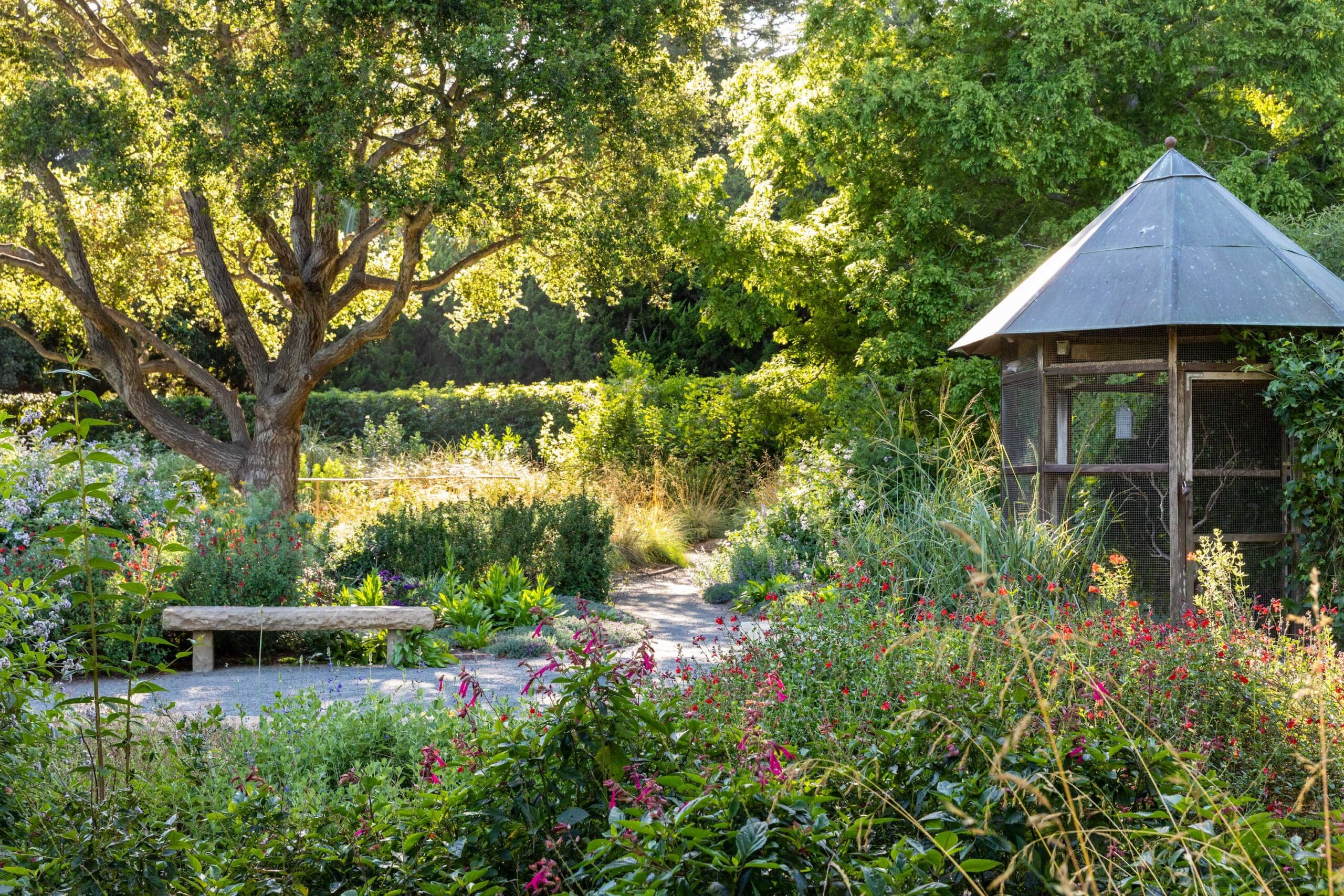
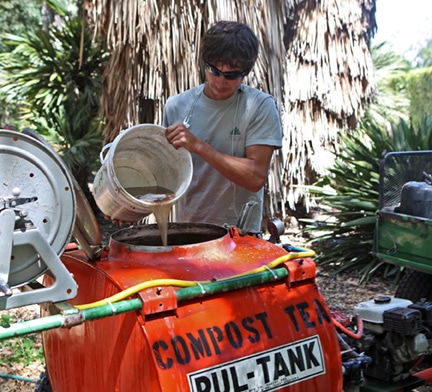
Lotusland was one of the first public gardens to become fully organic. We believe that healthy, living soil is the foundation for healthy plants. The Insectary Garden attracts predatory insects to eat pests and a healthy array of pollinators are attracted to its year-round display of flowers and fragrances. Lotusland’s soils are enriched with our own brew of compost tea, and we encourage birds of prey that help perform pest control. Our organic program ensures a safe and non-toxic environment for staff and visitors and protects our community’s potable water supply and ocean health.
The aviary honors Madame Ganna Walska’s beloved avian companion, “Happy.” Madame Walska was frequently seen with Happy on her shoulder, and even had an entire room set aside for her beloved cockatiel. Enjoy a rest on the nearby benches as the soft coos of doves fill the garden.
Until living specimens were discovered in China in 1944, the ancient dawn redwood was known only from fossils and thought to be extinct. The dawn redwood is the only remaining species in the genus Metasequoia. Unlike most redwoods it is deciduous, losing its leaves in winter. This ancient giant produces surprisingly small cones and seeds. Look for them scattered around the base of the tree.
As you walk through the Insectary Garden, breathe deeply and you may catch the smell of many sages, mints, and lavenders — all members of the mint family (Lamiaceae). These fragrant plants have short nectar-producing flowers. This feature makes them more accessible to pollinators with short mouthparts such as native bees.